
Whale Talk
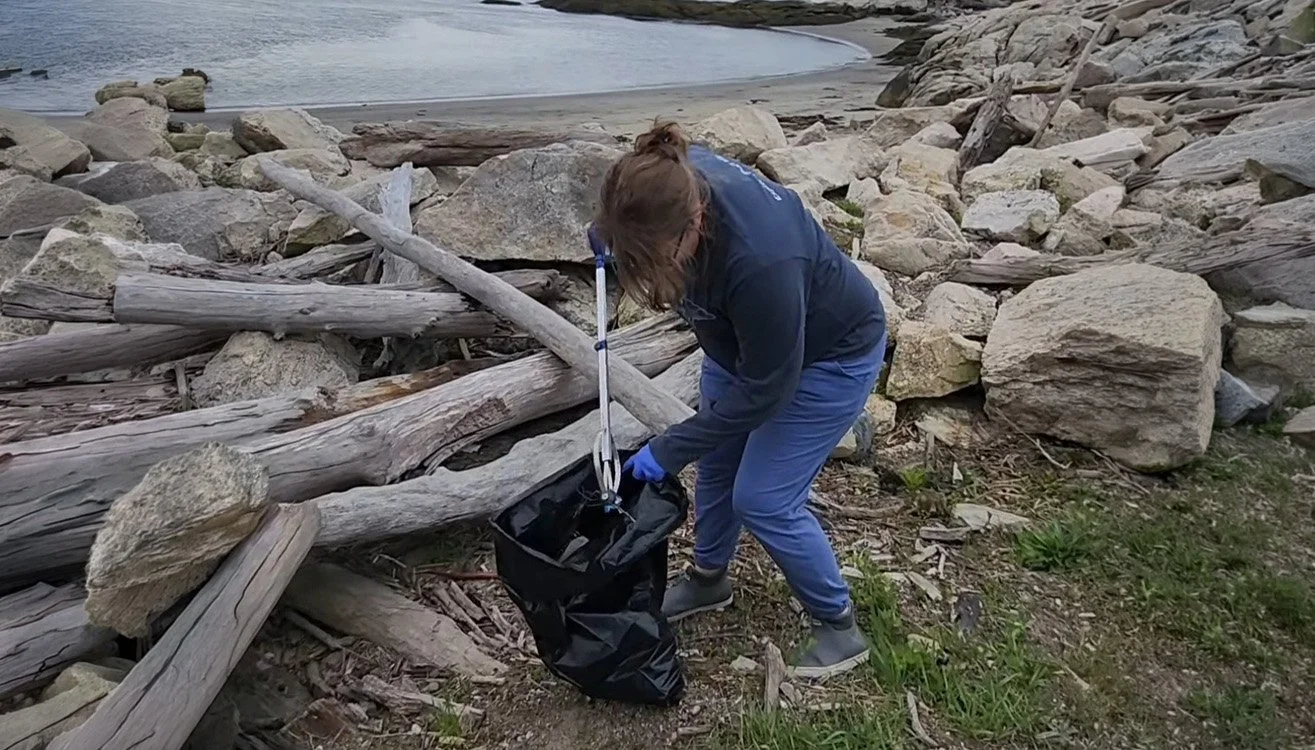
Keeping the Coastline Clean, One Beach at a Time
Within the Whale has adopted a beach through the Blue Ocean Society’s Adopt‑a‑Beach Program and begun hosting monthly cleanups at Fort Popham in Phippsburg. Learn how you can join the effort.
Over the past year, Within the Whale has taken me all over Maine, helping people step inside a whale and learn about the ocean in a hands‑on way. But education doesn’t end when Chunk deflates—protecting our marine environment is a 24x7 endeavor. That’s why I’ve adopted a beach through the Blue Ocean Society’s Adopt‑a‑Beach Program and begun hosting monthly cleanups at Fort Popham in Phippsburg.
Our first cleanup on May 24 was a wonderful start. In just two hours, we removed nearly three pounds of trash from the shoreline while collecting data that contributes to long‑term marine debris research.
These cleanups are simple, meaningful ways to make a real difference. Each session includes a short presentation on local marine debris issues, followed by small‑group data collection and a final weigh‑in of everything we’ve gathered. Kids love it, adults learn something new, and every piece of trash we remove is one less item drifting back into the Gulf of Maine.
If you’d like to join an upcoming cleanup, I’d love to have you there. Bring reusable gloves, dress in layers appropriate for the weather forecast that day, and come ready to help protect the ocean we all care about.
Just reach out to me at info@withinthewhale.com to get involved.
Book a Visit
Ready to go Within the Whale? We’re booking visits for schools, libraries, summer camps, and community events across Maine. Let’s bring the ocean to your neighborhood and splash into science.

How We Know the Whales: Tracking Humpbacks in the Gulf of Maine
If you’ve ever spotted the spout of a whale off the coast of Maine, you know how magical that moment can be. But did you know that researchers and scientists can often identify exactly which whale you saw?

If you’ve ever spotted the tail of a whale off the coast of Maine, you know how magical that moment can be. But did you know that researchers and scientists can often identify exactly which whale you saw?
That’s right, humpback whales, the same species as our beloved inflatable whale Chunk, are individually tracked and documented through a massive collaborative effort. This process helps researchers understand whale populations, migration patterns, health trends, and even family histories. And much of it starts with a simple sighting.
A Whale of a Catalog
Humpback whales are identified primarily by the unique markings on the underside of their tails (also called flukes). These markings act like fingerprints, no two flukes are exactly alike. Scientists photograph these flukes and use them to build and maintain the Gulf of Maine Humpback Whale Catalog, a centralized database that documents thousands of individual whales across decades curated by the Center for Coastal Studies.
So if you snap a photo of a whale’s tail in Maine, there’s a chance that the whale is already in the catalog, and if not, your sighting could be an important new entry!
Meet the Ocean’s First Responders
When a humpback is spotted close to shore, in distress, or has sadly stranded, it’s dedicated organizations like Marine Mammals of Maine (MMoME) and Allied Whale that jump into action.
Marine Mammals of Maine (MMoME) is a vital nonprofit that responds to marine mammal and sea turtle strandings, provides rehabilitation to sick or injured animals, and helps educate the public about conservation. They’re often the first call when a whale is found in trouble along the coast.
Allied Whale, based at the College of the Atlantic in Bar Harbor, is a leader in whale research.
These organizations work with researchers, boaters, and beachgoers to collect data and respond to situations that affect marine wildlife. Their work is not only essential for whale conservation but also helps educate the public about the fragile balance of our ocean ecosystems.
How You Can Help
If you see a whale while out on the water, take a picture if it’s safe to do so, especially of the tail! Then report your sighting to a local organization like the Center for Coastal Studies or Allied Whale. If the whale appears stranded, entangled, or injured, call the Marine Mammals of Maine hotline immediately at (800) 532-9551.
By being an extra set of eyes on the ocean, you become part of the conservation network working to protect these gentle giants.
At Within the Whale, we’re proud to honor the work of these organizations in our programs and share the stories of real whales, like Chunk, with students and communities across Maine. Because the more we know about these incredible animals, the more we can do to protect them.
Book a Visit
To learn more about whales, Within the Whale is booking visits for schools, libraries, summer camps, and community events across Maine. At the heart of our program is a life-size inflatable humpback whale, and yes, you can go inside it!
Every tail has a tale, let’s keep telling their stories.